Floods can rise quickly and without warning, turning safe areas into dangerous zones within minutes. Acting fast and making the right decisions can protect lives and reduce risk.
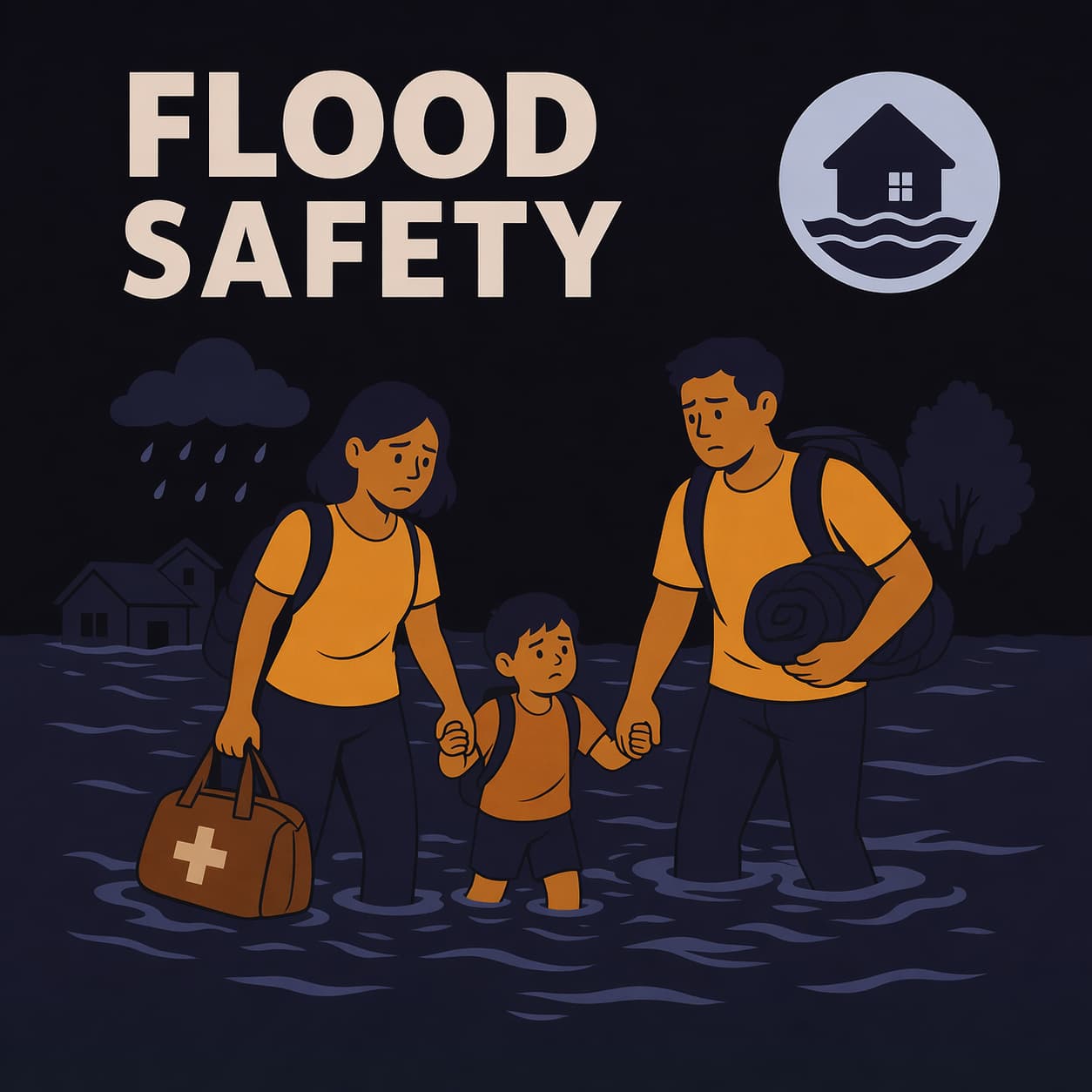
When to Act
- Water levels begin rising rapidly in your area
- Heavy rainfall continues for long periods
- Official flood warnings or alerts are issued
- Streets or drains start overflowing
Steps to Stay Safe During a Flood
1. Move to Higher Ground Immediately
Do not wait. Shift to a higher floor or safer elevated area as soon as water starts rising. If advised, evacuate early to avoid getting trapped.
2. Avoid Walking or Driving Through Water
Even shallow water can be dangerous. Just a small flow can knock you off balance, and deeper water can stall vehicles or sweep them away.
3. Turn Off Electricity and Gas
If safe to do so, disconnect power and gas supply to prevent electrical hazards, fire, or explosions.
4. Keep Emergency Essentials Ready
Carry essentials like your phone, flashlight, medicines, drinking water, and important documents in a waterproof bag.
5. Stay Updated and Follow Official Instructions
Listen to local authorities for evacuation routes, shelter locations, and safety updates. Avoid rumors and rely only on verified sources.
Important Note
If you are trapped, move to the highest possible point and signal for help. Avoid contact with floodwater as it may be contaminated. After the flood, do not return home until authorities declare it safe.